September 29, 2026
It’s Not the Tires. It’s You.
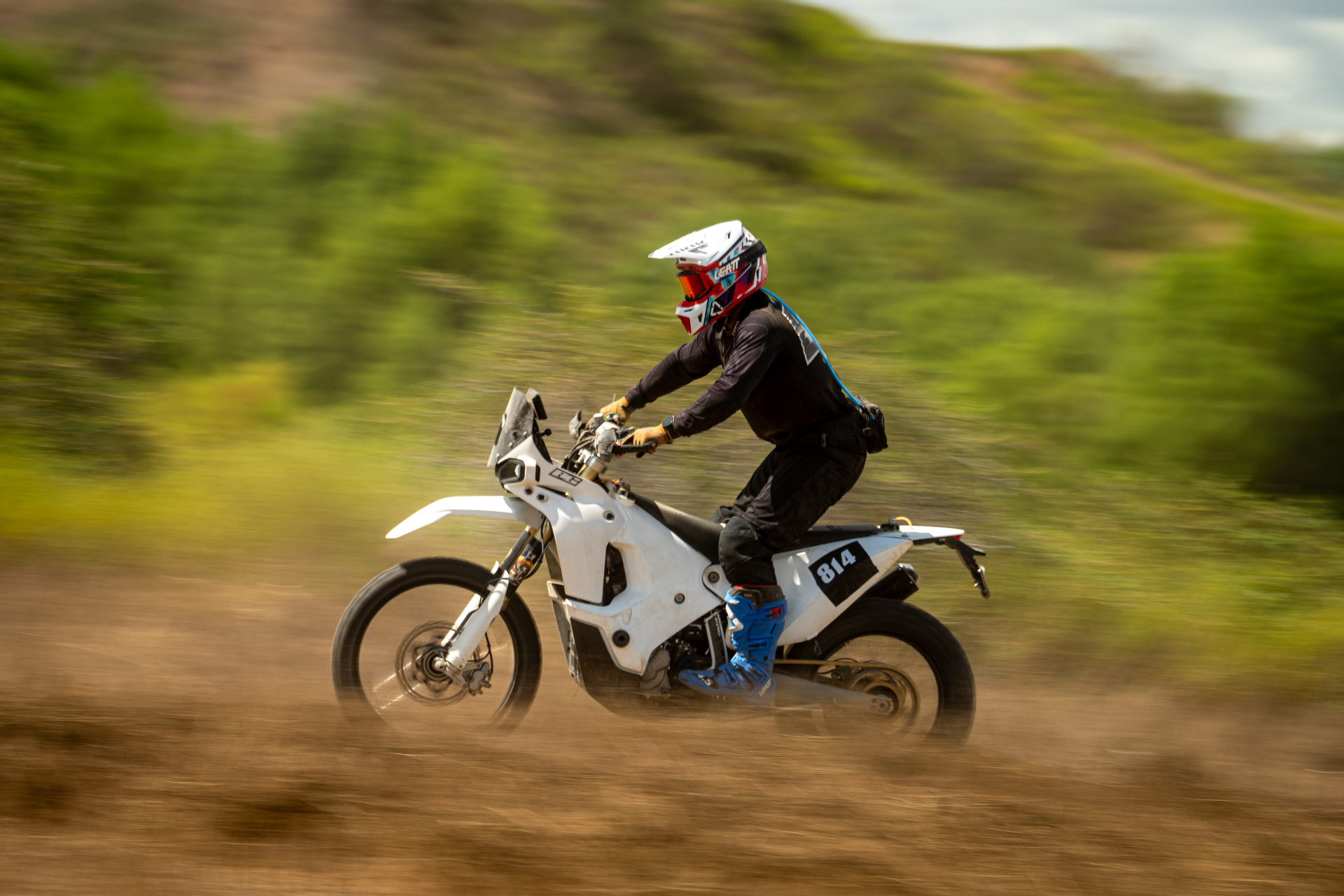
There’s a time-honored tradition among dirt bike riders: whenever something goes wrong, blame the equipment.
Front end washes in a corner? Bad tire. Rear spins halfway up a hill? Definitely the tire. Miss a rut, blow through a berm, and nearly introduce yourself to a pine tree? Clearly Michelin, Dunlop, Tusk, or whoever manufactured the round black thing attached to your wheel has some explaining to do.
It certainly couldn’t have anything to do with the rider sitting too far back, death-gripping the handlebars, chopping the throttle, or staring directly at the obstacle they were desperately trying to avoid.
Now, before this gets interpreted as a tire shop telling people that tires don’t matter—which would be a fairly questionable business strategy—they absolutely do. The correct tire for your terrain can make a huge difference in braking, acceleration, cornering, and overall confidence. Tire pressure, carcass construction, rubber compound, tread pattern, tubes versus mousses, and about a hundred other variables can change how a motorcycle behaves.
But there’s another variable that riders sometimes conveniently forget about.
The person holding the handlebars.
Putting DOT Adventure Tires to the Test
I was reminded of this recently while racing my Kove 450 Rally at a TX2 race here in Texas. TX2 runs a two-moto format with roughly 30-minute sprints, and the conditions at this particular race were hot, dusty, and filled with deep Texas sand.
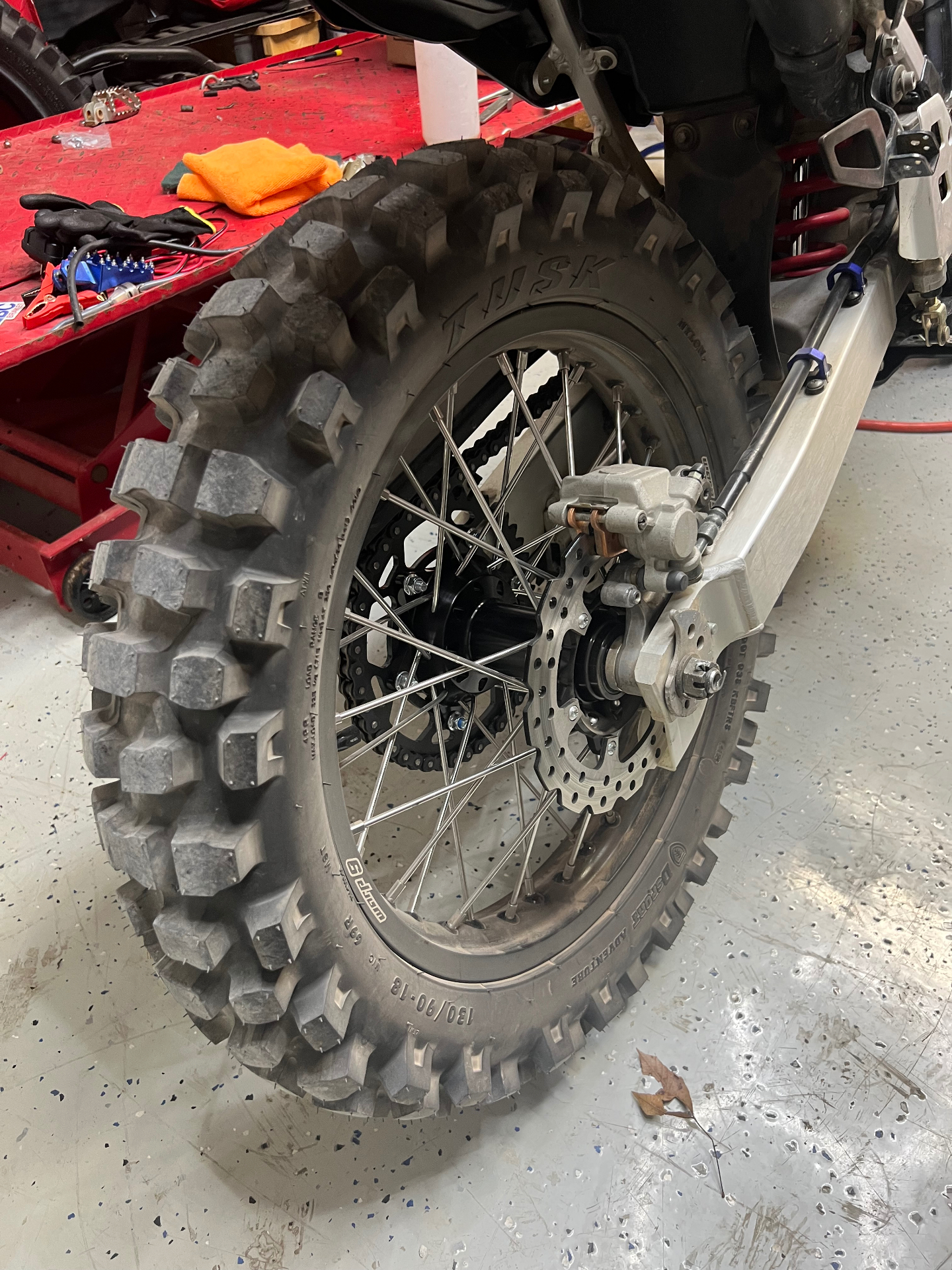
The Kove is already a fairly unconventional weapon for this kind of racing. It’s a 450cc rally bike rather than a purpose-built enduro race bike, and instead of mounting a dedicated soft-terrain race tire, I showed up with Tusk Dsport Adventure tires.
Yes, the DOT-approved adventure tires.
A good buddy of mine raced the same event on his KTM 500 EXC-F, and he was running Dsports as well. On paper, neither of us had the tire setup you’d expect someone to choose if the sole objective was going as fast as possible through a sandy off-road race.
Yet something interesting happened: neither of us spent the race wishing we had different tires.
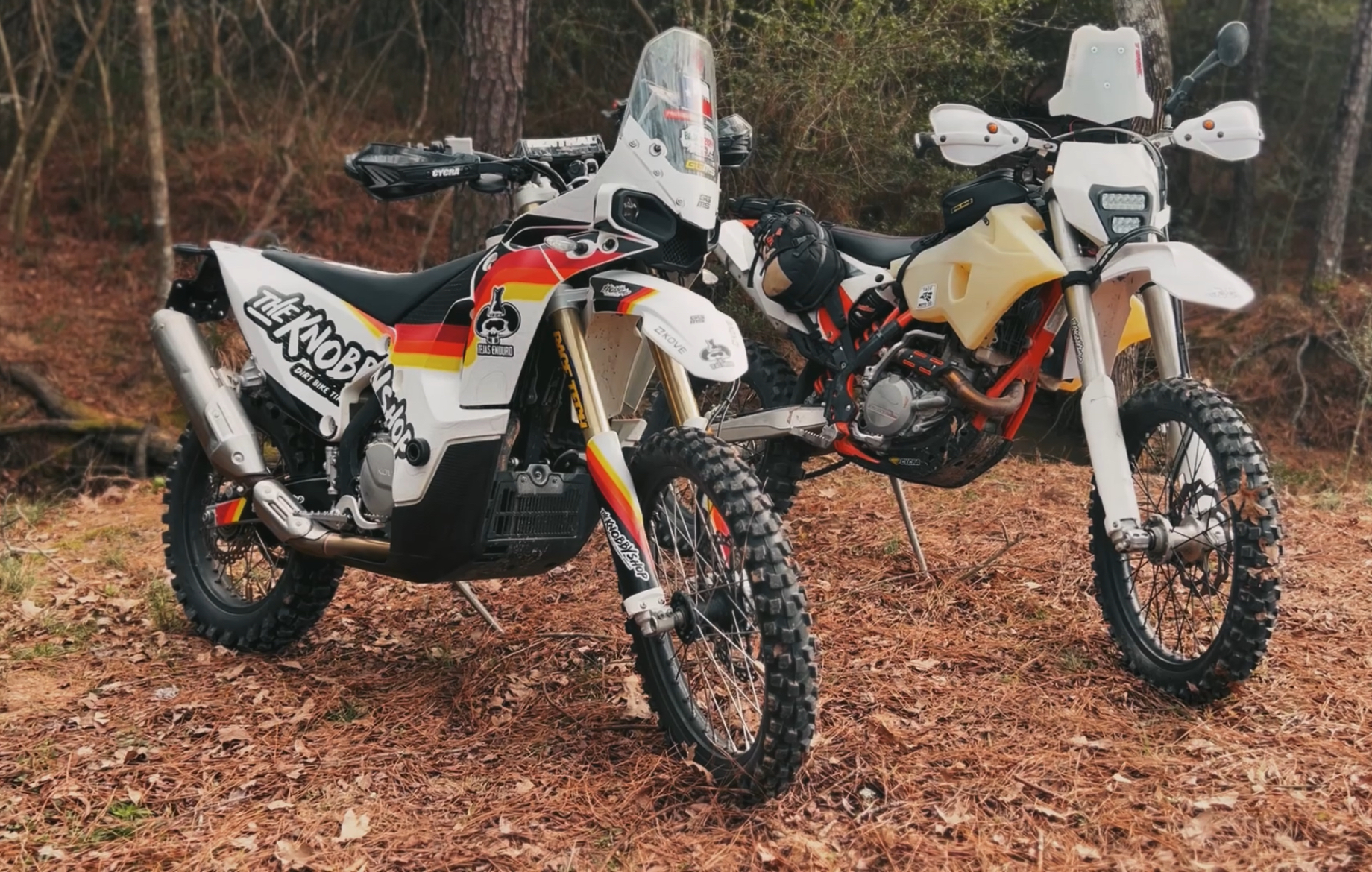
We both rode well, made plenty of passes, and the tires never felt like the limiting factor. The Kove found traction when I needed it, the front end was predictable, and I never had one of those moments where I thought, I could have made that if I had a better tire.
That doesn’t mean the Dsport is secretly the ultimate Texas race tire. It isn’t. A purpose-built off-road tire matched specifically to those conditions could absolutely provide more outright traction.
The point is that we weren’t riding at the limit of what those tires could provide.
And that distinction matters.
Traction Is More Than Rubber
We tend to talk about traction as though it’s something you purchase. Spend enough money on the right tire and suddenly your motorcycle will hook up everywhere.
Unfortunately, physics didn’t get that memo.
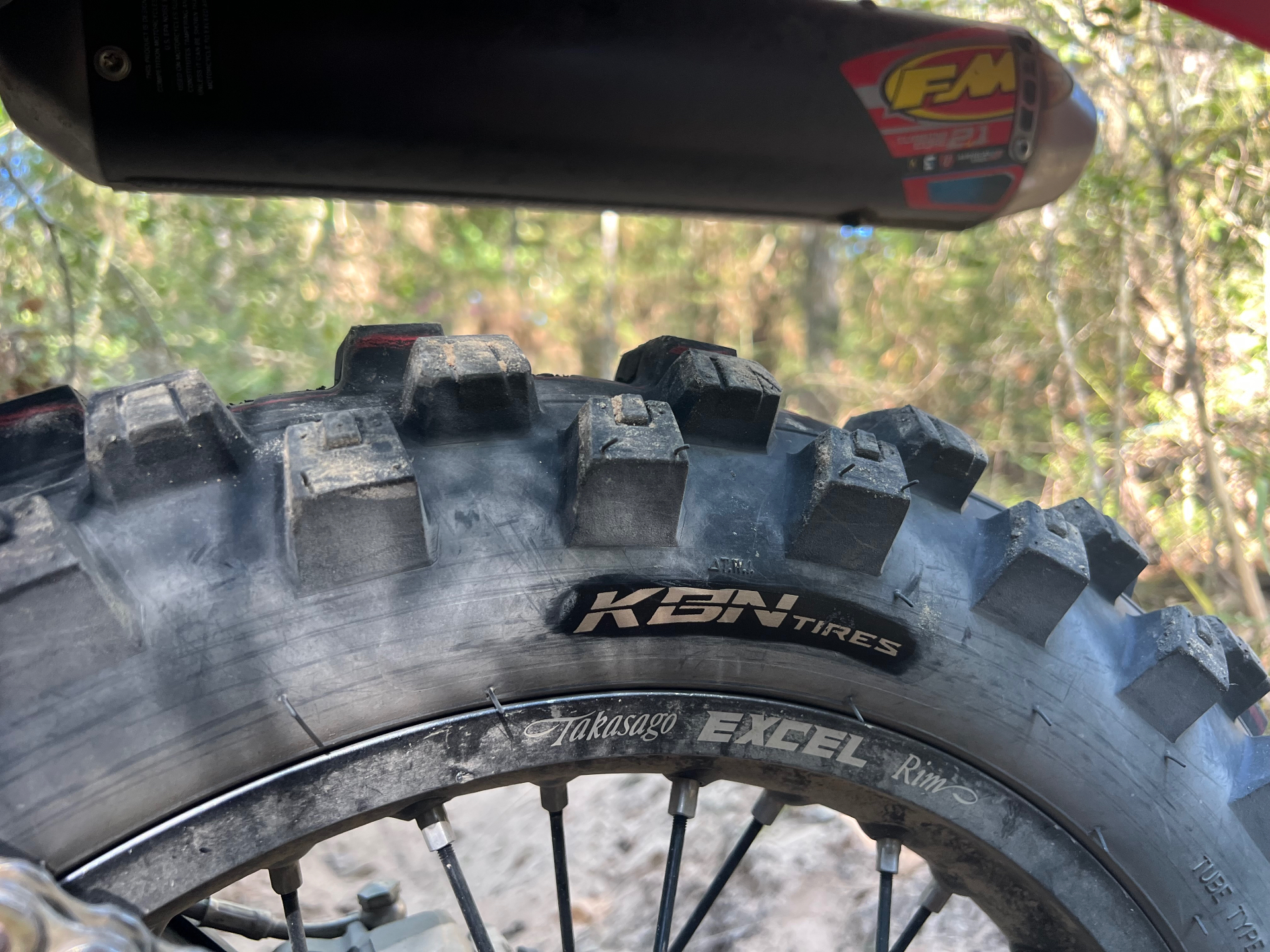
A tire can only work with the load and inputs you give it. Body position, throttle control, clutch control, braking technique, suspension movement, momentum, and where you’re weighting the motorcycle all influence how much traction the tire can generate.
Take a loose corner as an example. If you’re sitting too far toward the rear of the motorcycle while asking the front tire to turn, there isn’t much weight pushing that tire into the ground. Then the front pushes wide and we blame the tire for not having enough bite.
Of course it didn’t have enough bite. We weren’t giving it anything to bite with.
The same thing happens at the rear. A rider can install the softest gummy tire available and still light it up everywhere if every throttle input is an on/off switch. Meanwhile, an experienced rider can often find surprising amounts of traction from an average tire simply by being smooth, managing wheelspin, positioning their body correctly, and letting the motorcycle work underneath them.
That was essentially what we were doing at the TX2 race. We weren’t asking the Dsports to magically transform themselves into motocross tires. We were riding the motorcycles in a way that worked with the traction available.
The Modification Nobody Wants to Buy
This is where things get uncomfortable.
Buying motorcycle parts is fun. Practicing fundamentals usually isn’t.
A new tire arrives in a box. You mount it, stare at those beautiful untouched knobs for a few minutes, and immediately feel like the motorcycle has been upgraded.
Improving your riding technique involves repeatedly riding the same corner until you’re sick of looking at it. It means practicing braking drills, figure-eights, clutch control, standing position, weighting the pegs, and all the other boring stuff that doesn’t look particularly impressive on Instagram.
There’s no tracking number for better body position. UPS isn’t going to drop off improved throttle control Thursday afternoon.
But those skills follow you from motorcycle to motorcycle and tire to tire.
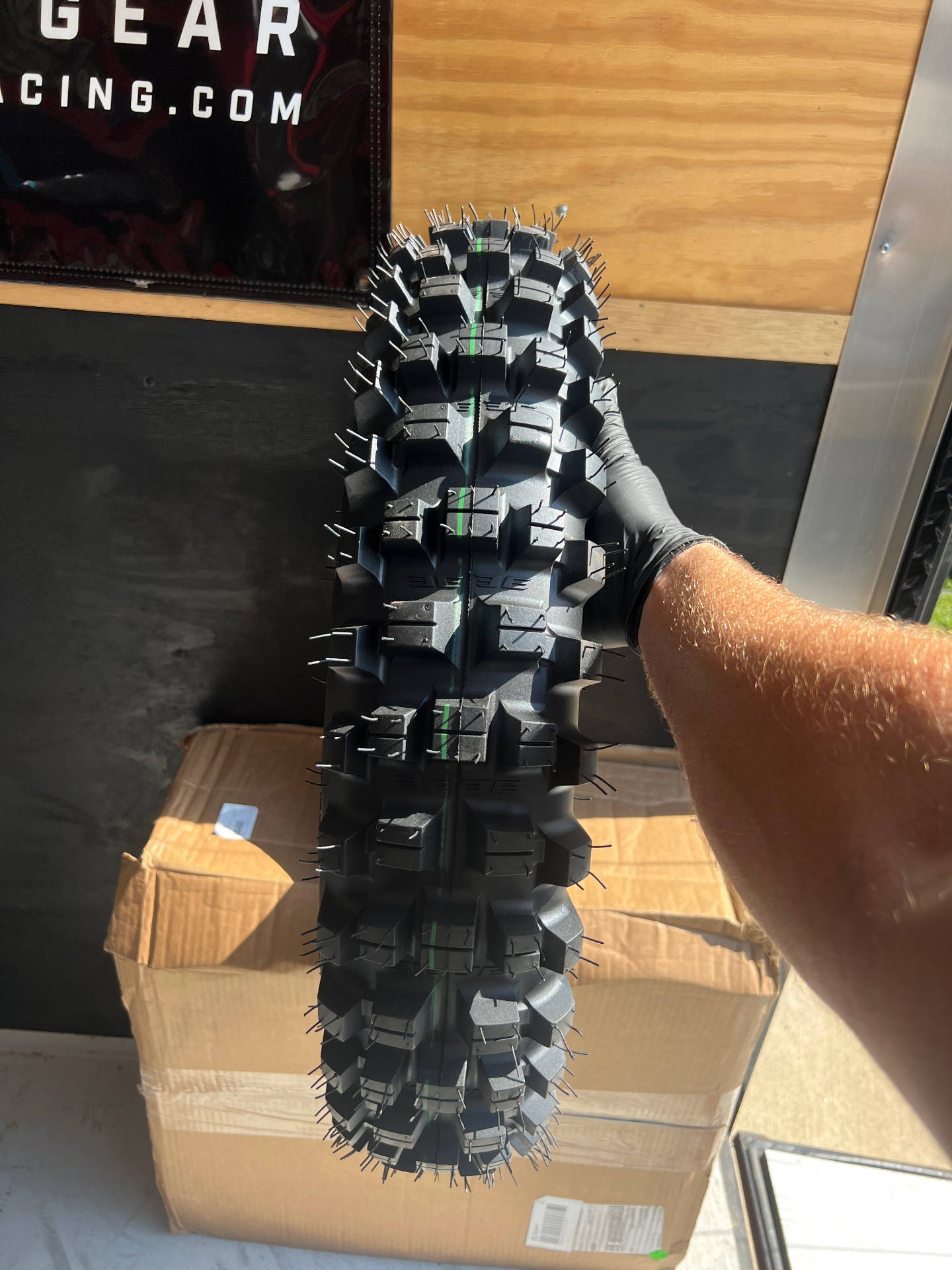
That’s why you’ll occasionally watch an experienced rider on a worn-out dual-sport tire disappear down a trail while somebody behind them on a brand-new gummy tire is spinning, sliding, and wondering whether they ordered the wrong compound.
The expensive tire isn’t necessarily doing anything wrong.
It may simply be waiting for better instructions.
Does That Mean Better Tires Don’t Matter?
Absolutely not. Better tires matter tremendously, especially as speeds increase and riders begin operating closer to the limits of available traction.
A tire designed specifically for sand will generally perform better in sand than a 50/50 adventure tire. A soft enduro tire will behave differently on wet roots and rocks than a harder DOT tire. Different carcasses affect compliance and feel, and tire pressure or mousse choice can dramatically alter the available grip.
The important distinction is that a better tire increases the amount of traction available; it doesn’t teach you how to use it.
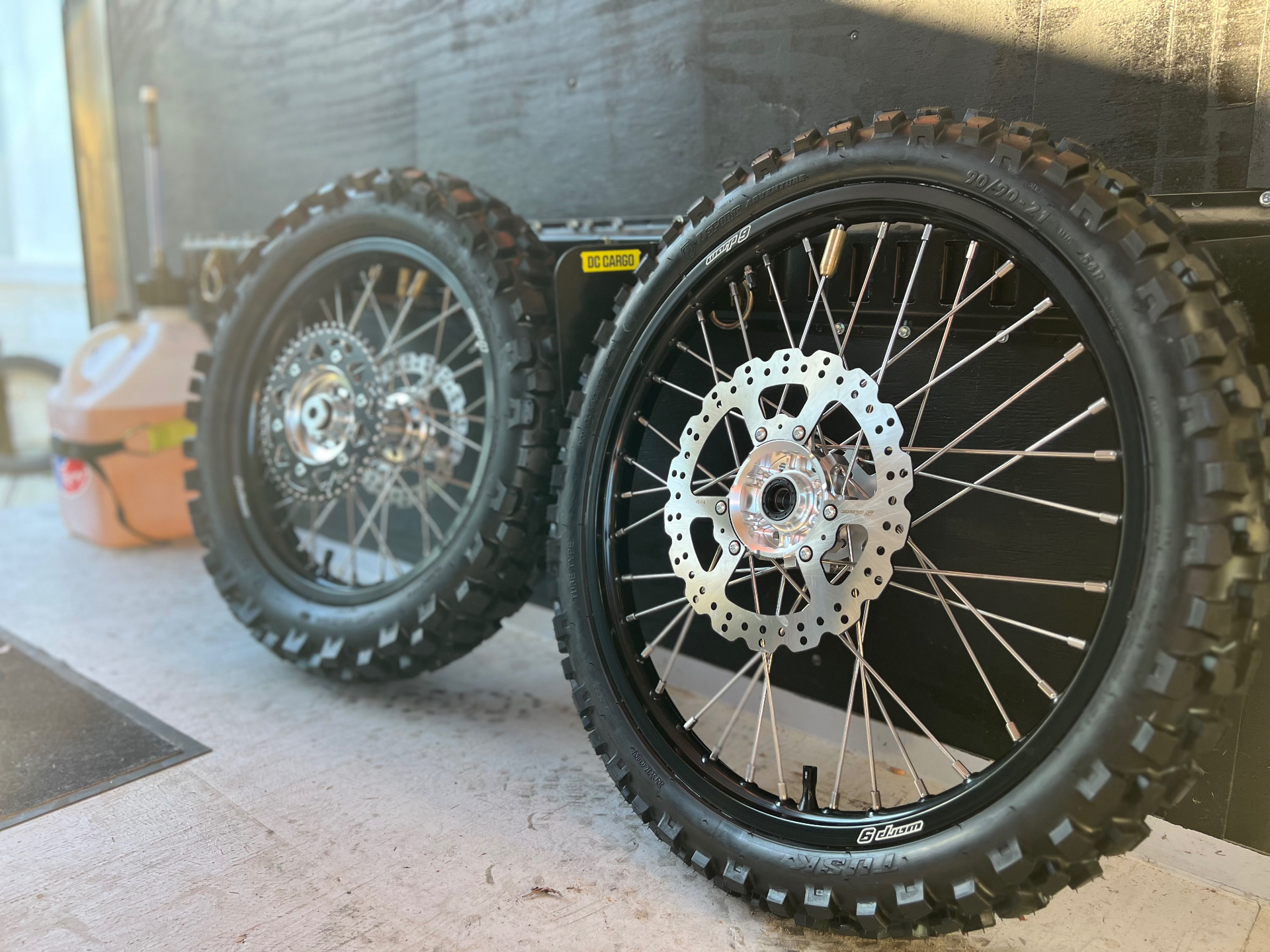
Think of the tire as raising the motorcycle’s traction ceiling. Riding skill determines how close you can actually get to that ceiling.
For a newer rider, the limiting factor might be well below what the tire is capable of. As the rider becomes faster and more technically proficient, equipment becomes increasingly important because they’re finally asking enough from it to expose its limitations.
That’s also why experienced riders can usually identify tire differences much more clearly. They’re consistently loading the tire hard enough to discover where those differences actually matter.
Before You Blame the Tire
The next time your bike refuses to cooperate, it’s worth doing a little troubleshooting before immediately ordering another set of rubber.
If the front keeps pushing, consider where your body is positioned and whether you’re actually loading the front tire. If the rear constantly spins, think about your throttle and clutch inputs. If the motorcycle feels nervous over roots and rocks, consider whether you’re relaxed enough to let it move underneath you instead of fighting every movement through the handlebars.
And ask yourself one particularly annoying question:
Could a better rider make this tire work?
If the answer is yes, then the tire probably isn’t the first thing that needs upgrading.
That doesn’t mean you shouldn’t experiment with tires. Finding a tire that works well for your motorcycle, terrain, and riding style is absolutely worthwhile. It’s one of the reasons we spend so much time at The Knobby Shop helping riders choose the right setup rather than simply selling whatever tire happens to have the most aggressive-looking knobs.
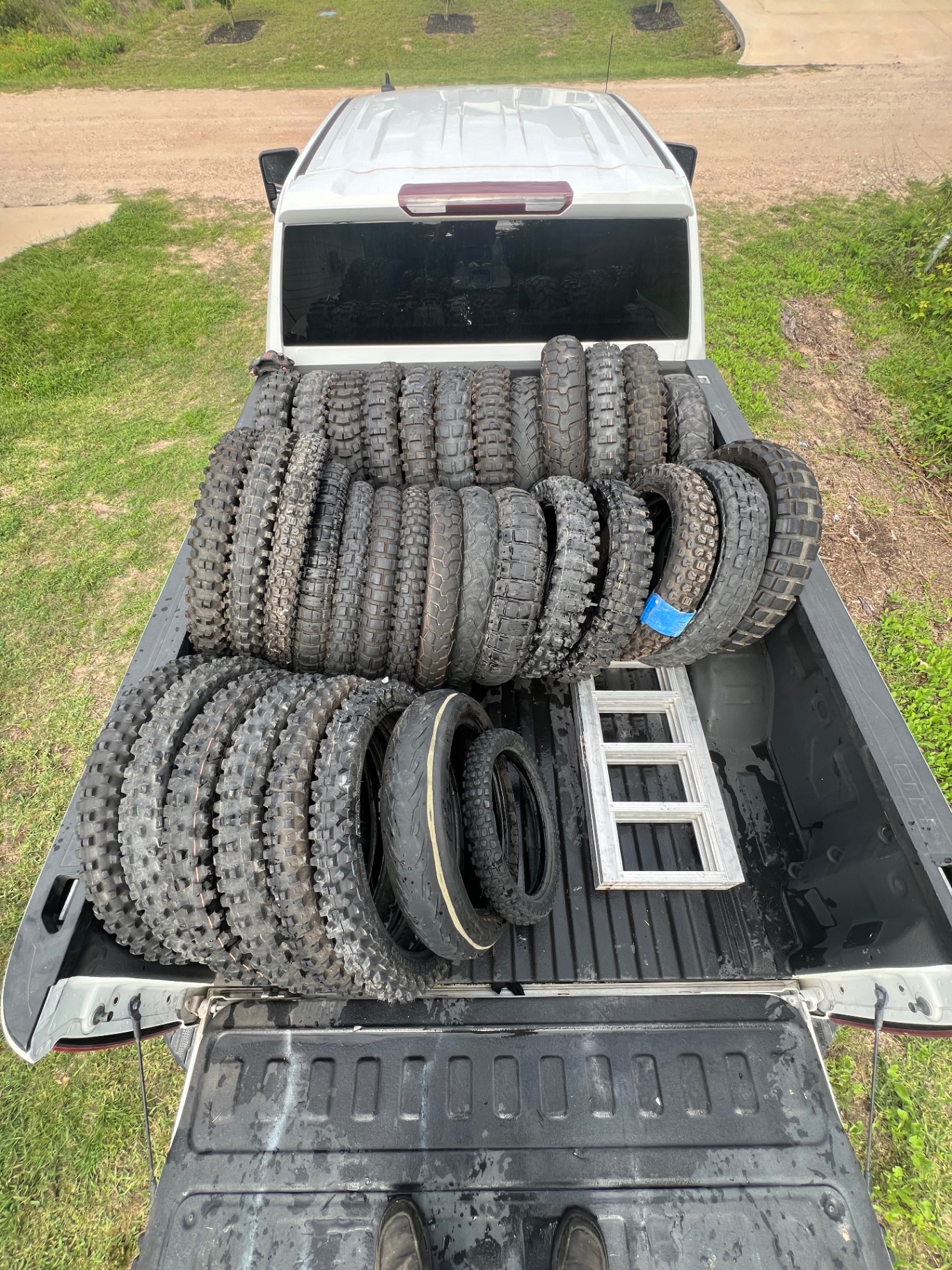
But the best tire in the world can’t compensate for every mistake happening above the footpegs.
So, Is It Really Your Tires?
Sometimes, yes.
Sometimes the tire is worn out. Sometimes you’re running the wrong pressure. Sometimes the compound or carcass doesn’t suit the terrain. Sometimes you’ve legitimately reached the performance limit of that particular tire and a different setup will give you the traction you’re looking for.
And sometimes you’re blaming $150 worth of rubber for a problem that could be fixed by spending an afternoon practicing corners.
Our little experiment at the TX2 race wasn’t proof that tire choice doesn’t matter. If anything, it demonstrated something more useful: a tire doesn’t have to be perfect for a skilled rider to make it work.
My Kove 450 Rally was racing through deep Texas sand on Tusk Dsport DOT adventure tires. My buddy’s KTM 500 EXC-F was doing the same. We made passes, had a blast, and neither of us walked away feeling like our tires ruined the race.
Could we have gone faster on dedicated race tires?
Probably.
Were the Dsports the thing holding us back?
Not that day.
So buy good tires. Choose the right ones for your motorcycle and terrain. Set your pressures correctly and replace them when they’re worn.
But don’t forget to upgrade the most important part of the motorcycle every once in a while.
The rider.
And when you finally get fast enough that the tires really are the problem?
Come see us.
We’ll happily sell you another set.
The Knobby Shop
Dirt Bike • Dual Sport • Adventure
Tires, wheels, suspension—and occasionally uncomfortable truths.